FREE SHIPPING OVER 2500SEK WORLDWIDE

CONCEPT / INTENTION
An installation exploring public shaming, power, and the emotional weight of humiliation.
Details:
Course: Textila Uttryck
Year: 2023
Duration: 1 year, 50%
This project explored textile expressions through the lens of power and gender. Through research, experimentation, and reflection, I developed a textile-based visual work that was presented in the final exhibition. The project allowed me to push the boundaries of materiality and storytelling within textiles, creating a piece that engages viewers on both a conceptual and sensory level.
Methods & Tools: Research, pattern construction, material exploration, sketching, prototyping, textile techniques, concept development, visual presentation

RESEARCH
Challenging Stigma Through Design
ABOUT
"Stigma" is an inner representation of the emotional responses provoked by public shaming.
Through this work, I aim to promote understanding of the mechanisms and consequences of social humiliation — to raise awareness, encourage engagement, and inspire cultural change.
The goal is to contribute to a shift towards empathy, respect, and inclusion.
I believe that through awareness and understanding, we can move towards a society grounded in compassion and justice.
By exploring questions of gender, power, and grief, the work invites reflection on how shame has been — and still is — used as a tool of control.

PURPOSE
Grief, power, and gender are deeply human and complex topics, intricately woven into both individual experiences and societal structures. These themes are often interconnected and can profoundly influence people’s lives and well-being.
Grief is a universal human experience arising from loss, pain, or oppression. Power and gender, as societal constructs, shape how individuals experience and navigate grief.
Historically, women have often had limited social power, affecting how they process grief and receive support and understanding. Exploring these themes in artistic work fosters awareness, openness, and empathy for the diverse ways grief is experienced and managed.
WHY
Understanding public shaming can be enlightening and meaningful in multiple ways:
-
Empathetic Awareness: It cultivates compassion for those affected by public shaming, deepening understanding of the challenges and difficulties others face.
-
Social Reflection: It highlights and questions societal norms and mechanisms that enable humiliation and marginalization, encouraging dialogue about fairness and empathy.
-
Cultural Change: By exploring public shaming, we can promote a culture of empathy and respect, contributing to a more inclusive and supportive environment.
Through artistic exploration, I aim to make a meaningful contribution to discussions around gender, power, and grief, fostering awareness and dialogue.


RESEARCH
The installation was developed through exploration of material, atmosphere, and historical research into the cultural practices of punishment and shame. Heavy fabrics and subdued lighting were used to create a physical and emotional sense of confinement. The choice of textile as medium was essential — both as a metaphor for vulnerability and as a tactile, bodily surface that connects to themes of intimacy and exposure.
Research Questions
-
How can art and design challenge traditional gender roles and power structures?
-
In what ways can art communicate and explore feelings of grief and loss linked to oppression and social injustice?
-
How can art and design create space for vulnerable voices to be heard and understood?
-
How can art and design help redefine and question societal norms around gender and power?
-
How can art and design foster healing and community in the face of grief and oppression?
-
What does public shaming look like in contemporary society, and what are its consequences?
PROCESS
PROCESS


THE INSTALLATION
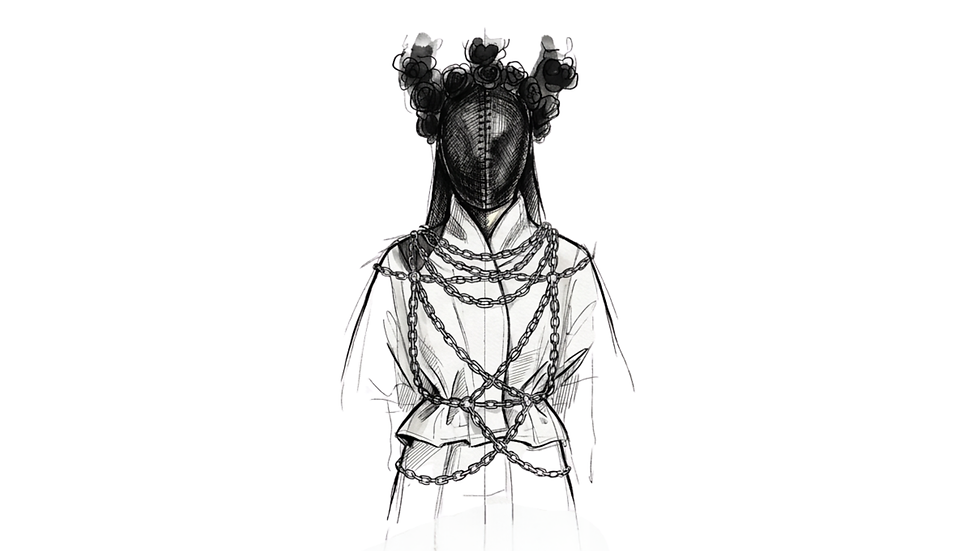
The piece takes the form of a dark, oppressive textile room.
At its center stands a physical portrayal of a woman — chained, yet upright and strong.
Her head is covered with a horluva (“whore hood”) and horkrona (“whore crown”), referencing historical punishments imposed upon women accused of moral transgressions, regardless of guilt or innocence.
These symbols reflect how public shaming has historically been used to strip women of their power and dignity.
Visitors were invited to enter the space, to physically experience the weight and closeness of the textile environment, and to interact by writing a comment directly on the woman’s garment — a gesture that transformed the viewer from observer to participant.


REFLECTION
This project deepened my understanding of how material and spatial composition can evoke strong emotional responses.
Through in-depth research and conceptual exploration, I strengthened my ability to translate complex social themes into physical form and atmosphere.
It also helped me connect theoretical insights with sensory and emotional design expression.

CULTURAL CHANGE
By exploring public shaming, we can promote a culture of empathy and respect, contributing to a more inclusive and supportive environment.

SOCIAL REFLECTION:
Highlights and questions societal norms and mechanisms that enable humiliation and marginalization, encouraging dialogue about fairness and empathy.
